
10 Non-Scary Halloween Alternatives for Kids Who Don't Like Spooky Stuff
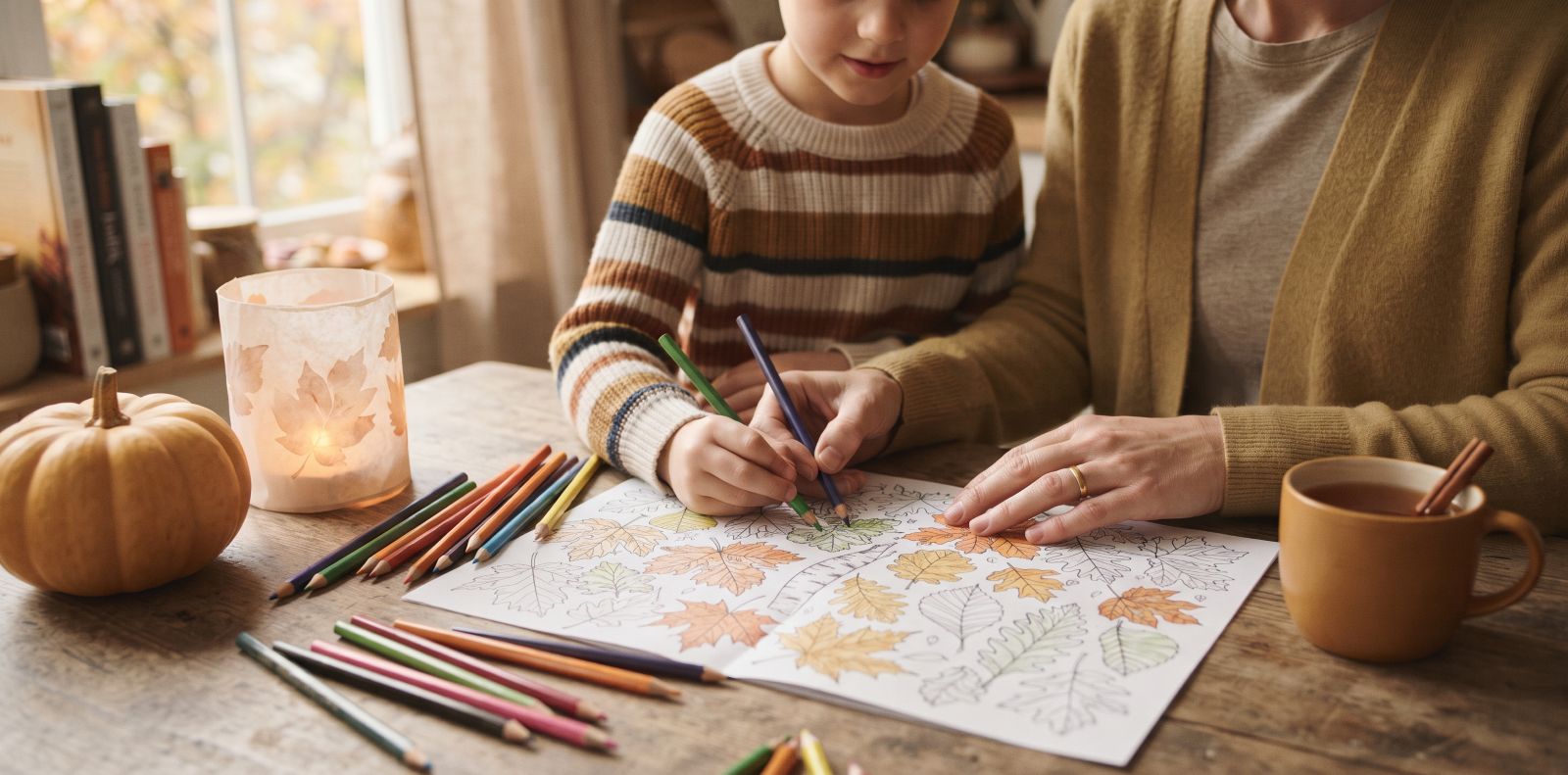
Quick answer: If your child finds Halloween too spooky, you do not have to skip the season. Fall has plenty of cozy ways to celebrate: leaf art, a gratitude jar, a lantern walk in daylight, a family remembrance evening, or coloring your way through autumn traditions from other countries. Halloween falls on Saturday, October 31 this year, so you have a few weeks to plan a low-pressure alternative that fits your child, or to add one next to trick-or-treating for a child who likes both.
Nothing here is meant to say that Halloween is bad. Many families enjoy it. These ideas are simply another way to celebrate autumn for children who prefer calm to creepy, and for families who do not mark the day.
Why some children don’t enjoy Halloween
Dark streets, loud decorations, masks and crowds can be a lot for small children, and some are sensitive to scratchy costumes or surprises. The Child Mind Institute suggests following your child’s lead: if a particular scare feels like too much, it is fine to celebrate in other ways, and you should not push a child to take part before they are ready or keep going once they are overwhelmed. That is a good rule for choosing any of the ideas below.
10 gentle ways to enjoy fall
1. Make leaf art and rubbings
Collect leaves on a walk, then place them under paper and rub with the side of a crayon. Glue the best ones into a “fall collage”. It takes little preparation and works for most ages.
2. Carve or paint a pumpkin (the friendly kind)
Carved pumpkins, called jack-o’-lanterns, are one of the best-known Halloween traditions, according to Britannica. Keep the fun and drop the fright: paint a smiling face, a pattern or a favorite animal instead of a scary one.
3. Hold a daytime fall festival at home
Set up a few stations in the yard or living room: bobbing for apples is optional, but a leaf toss, a bean-bag throw at a paper pumpkin and a simple craft table are plenty. Invite a few friends and finish before dark.
4. Go on a lantern walk at dusk
Make paper lanterns, add a battery tea light, and walk around the block while it is still light. You get the glow and the adventure, without darkness and surprises.
5. Start a gratitude jar
Each evening, each person writes or draws one thing they are thankful for and puts it in a jar. Read them aloud together at the end of the month. It is a quiet, warm habit that fits the season.
6. Bake something with apples or pumpkin
Baked apples, pumpkin muffins or apple slices with cinnamon give small hands real jobs, such as stirring, sprinkling and measuring, and the kitchen smells like fall.
7. Go on a nature scavenger hunt
Make a simple list of things to find outdoors: a red leaf, an acorn, a feather, something round. Add a pencil for tick marks and a small bag for treasures.
8. Have a family remembrance evening
Britannica notes that Halloween, on October 31, opens a three-day Christian observance: All Saints’ Day on November 1 and All Souls’ Day on November 2, which are days for remembering people who have died. Many families, whatever their beliefs, find a quiet evening of looking at old photos and sharing happy stories a warm way to mark the season. Keep it light and loving, and let your child ask questions at their own pace.
9. Color your way around the world
Fall is celebrated in many ways: harvests, lanterns, kites, family gatherings and days of remembrance. Looking at how children in other countries mark the season turns a quiet afternoon into a small geography lesson. Our book (see below) is built around this idea.
10. Have a cozy story and snack night
Pick three picture books about the seasons, make a warm drink, turn off the screens and read by lamplight. Let your child choose the order.
At a glance
| Idea | Preparation | Works well for |
|---|---|---|
| Leaf art and rubbings | Low | Ages 3–8, rainy days |
| Friendly pumpkin painting | Low | Ages 3–10 |
| Daytime fall festival | Medium | Playdates, classes |
| Lantern walk at dusk | Medium | Families who like the glow of the evening |
| Gratitude jar | Low | All ages, all month |
| Apple or pumpkin baking | Medium | Ages 4+ with help |
| Nature scavenger hunt | Low | Ages 4–9 |
| Remembrance evening | Low | Families, grandparents |
| Coloring around the world | Low | Ages 6–9, homeschool, classroom |
| Story and snack night | Low | Evenings, younger children |
A coloring trip around the world
Autumn Traditions Around the World for Kids is an educational coloring and activity book for ages 6 to 9. It visits 27 countries and shows how families celebrate autumn, with three pages for each place: a country and tradition page, a page of symbols and local words, and a scene to color. Its table of contents includes Día de los Muertos in Mexico, giant kites in Guatemala, Sukkot in Israel, Thanksgiving in the United States, Zaduszki in Poland, Obon in Japan, Chuseok in South Korea and Ngahuru Hākari in New Zealand.
For context on one of these, UNESCO describes the Indigenous festivity dedicated to the dead in Mexico as observed at the end of October and the beginning of November, when families welcome the returning souls of loved ones with flowers, candles and offerings. Traditions vary by region and family, and the book is meant as a first, respectful introduction, not a complete guide.
You can find the book on Amazon and read more on its book page. You can try six printable pages from the book first with the free sample PDF. For a child who loves flags, our guide to flag colors and their meanings is a good next read, and coloring is also good practice for small hands, as we explain in coloring flags and fine motor skills.
Disclosure: Alex Herek is the publisher of this book. You can find all titles on the Amazon author page.
Frequently asked questions
Is it okay to skip Halloween? Yes. Many families skip it or celebrate in their own way for cultural, religious or personal reasons, and some children are simply not ready for the scary parts. You can always add or drop elements from year to year.
Can my child still dress up without a scary costume? Of course. A costume does not have to be spooky: an animal, a favorite character, a gardener or a leaf all work, and the Child Mind Institute advises that a child who finds a costume uncomfortable can skip it.
What if my child enjoys Halloween but only some of it? Break it into small steps. Try the daytime part first, such as pumpkin painting, and stay for the parts your child likes. End on a positive note instead of finishing the whole route.
Are these activities connected to any religion? Most are secular crafts and games. The remembrance evening and some traditions in the book relate to religious or cultural observances, which we describe informationally and respectfully.
What age is the book for? It is written for ages 6 to 9 and works well at home, in a homeschool group or in a classroom.
Key takeaways
- Halloween is on Saturday, October 31, and you can celebrate fall in gentler ways.
- Follow your child’s lead: don’t push, and end on a good note.
- Many alternatives are low-preparation: leaf art, gratitude jars, scavenger hunts and story nights.
- Coloring about autumn traditions in other countries adds geography and culture to the season.
Sources
- Halloween, Encyclopaedia Britannica (date, carved pumpkins and other traditions, Allhallowtide: All Hallows’ Eve, All Saints’ Day, All Souls’ Day).
- Navigating Halloween Fears and Dilemmas, Child Mind Institute (following a child’s lead, not forcing costumes or participation, gradual steps).
- Indigenous festivity dedicated to the dead, UNESCO Intangible Cultural Heritage (Día de los Muertos timing and customs).
Want to try the Autumn Traditions book?
Grab a free 6-page sample from "Autumn Traditions Around the World for Kids."