
How to Introduce World Cultures to Toddlers and Young Kids at Home
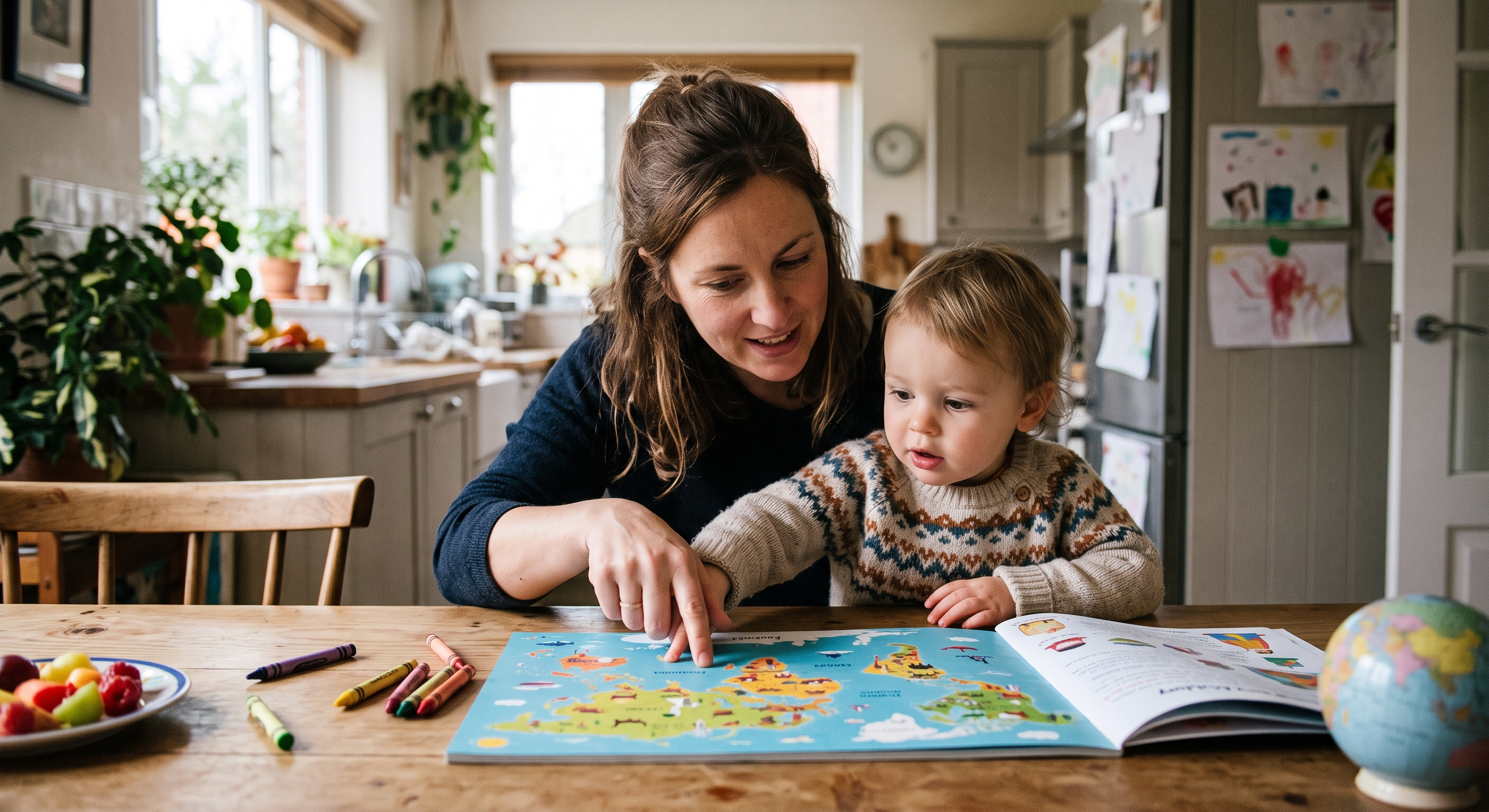
Most children won’t set foot on six continents before kindergarten — but they can still grow up knowing the world is big, colorful, and full of people worth caring about. Teaching cultural awareness doesn’t require plane tickets. It requires consistency: small, repeated moments where a child hears a new word, tastes a new food, or colors a flag they’ve never seen before.
This guide breaks down how to introduce world cultures to toddlers (ages 1–3), preschoolers (ages 3–5), and young school-age kids (ages 5–8) at home, with activities that fit into an already-busy week.
Why cultural awareness matters this early
Early childhood researchers generally agree that children start noticing racial, ethnic, and cultural differences as early as age two or three — and by age five, many have already formed attitudes about those differences, whether or not adults have talked about them directly. Left unaddressed, that awareness fills in with stereotypes absorbed from media or casual comments. Addressed with warmth and curiosity, it becomes the foundation for empathy, flexibility, and confidence in a diverse world.
The goal at this age isn’t geography mastery. It’s exposure: normalizing the idea that people eat different foods, speak different languages, celebrate different holidays, and are still, underneath all of it, people.
Toddlers (ages 1–3): sensory first, facts later
Toddlers learn through their senses, not lectures. At this stage, “world cultures” should show up as sounds, textures, and pictures — not explanations.
- Play music from different countries. A few minutes of Afrobeat, Andean flute music, or Bollywood soundtracks during playtime exposes toddlers to new rhythms without any structured “lesson.”
- Read board books with diverse faces and settings. Look for books that show everyday life — meals, families, homes — in different parts of the world, not just holidays or costumes.
- Try new foods together. Introducing a new fruit, spice, or dish from another cuisine at snack time is a low-effort, high-repetition way to build comfort with “different.”
- Say simple words in another language. “Hello” and “thank you” in two or three languages, repeated during daily routines, plant early awareness that language itself varies.
Preschoolers (ages 3–5): stories, maps, and hands-on play
By preschool age, kids can hold onto simple facts and enjoy naming and sorting — which makes this the sweet spot for structured but playful cultural activities.
- Use a big, simple world map or globe. Point to where the family lives, then to a country you’re “visiting” that week. Preschoolers love the ritual of picking a new spot each time.
- Run a weekly “country of the week.” Pick one country, then thread it through the week: a food, a flag to color, a song, and one fact (“In Japan, many people take off their shoes before entering a home”).
- Use coloring pages as a teaching tool. Coloring is already a preschool staple — pairing it with country-specific pages (flags, traditional dress, landmarks, local animals) turns an activity kids already love into passive cultural learning. This is the exact approach behind the Children of the World and Their Cultures series, which walks preschoolers through a continent at a time, country by country.
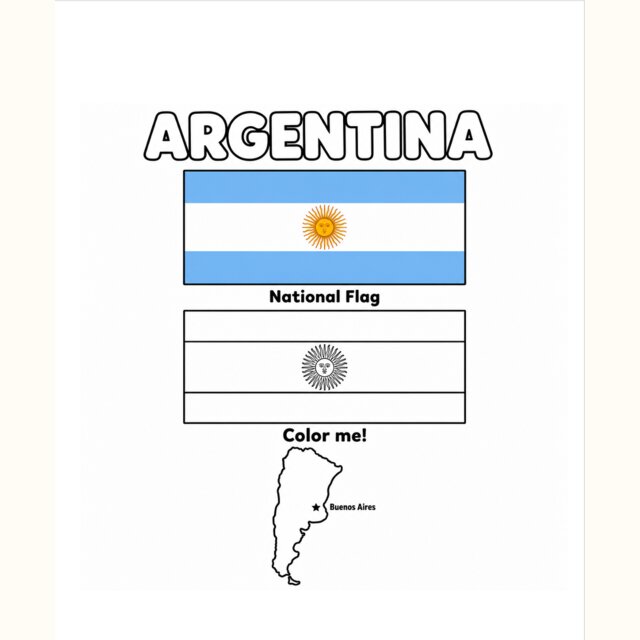
Try it yourself: download a free flag-and-map coloring card and see how it works with your preschooler this week.
- Celebrate one holiday outside your own tradition. Diwali, Lunar New Year, Día de los Muertos, Eid — pick one a year and do a small, age-appropriate activity around it.
- Let them “cook” (with supervision). Stirring, spreading, or decorating a simple dish from another country builds a sensory memory tied to a specific culture.
Young kids (ages 5–8): facts, questions, and real connections
Once kids can read a little and ask “why,” cultural learning can get more concrete without becoming a school lesson.
- Start a “passport” activity book. A simple notebook or printable where kids stamp, draw, or write one fact per country keeps them engaged over weeks or months.
- Watch short, kid-appropriate videos about daily life abroad. Seeing real children their own age going to school or playing in another country does more than any adult explanation.
- Talk about what’s the same, not just what’s different. Every culture has families, games, favorite foods, and celebrations — anchoring lessons in similarity keeps “different” from meaning “strange.”
- Connect it to family heritage. If your own family has roots in another country or region, this age is old enough to start real conversations about where relatives came from and what traditions mean.
- Encourage questions without needing perfect answers. “That’s a great question — let’s look it up together” models curiosity better than having every fact memorized.
Five low-prep activities to start this week
- Put a world map on the fridge or wall and add a sticker each time you talk about a new country.
- Cook one meal this week from a cuisine your family doesn’t usually eat.
- Print or buy a themed coloring page and talk through what’s on it while your child colors — Children of the World is built exactly for this.
- Borrow two picture books set in different countries from the library.
- Pick one holiday from another culture to learn about together this month.
None of this replaces a real conversation, of course — a coloring page just gives a child something to do with their hands while that conversation happens. That pairing is also why coloring pages tend to beat textbooks for this age group: the page becomes proof of what a child learned, not just something they half-listened to. And if empathy — not just geography — is the goal, Children of the World’s flag-and-friend format is built specifically to make “another culture” feel like a new friend rather than an abstraction.
Frequently asked questions
At what age should I start teaching kids about other cultures? Most early childhood experts suggest starting as early as toddlerhood, since children begin noticing differences in people around age two to three. Simple sensory exposure — music, food, pictures — is appropriate well before kids can understand explanations.
Do I need to travel for my child to learn about world cultures? No. Books, coloring activities, music, food, and video calls with family or pen pals abroad can all build genuine cultural awareness without leaving home.
How much time does this actually take? Very little. A “country of the week” approach can run on ten to fifteen minutes a few times a week — a book at bedtime, a coloring page, or a new food at dinner.
What’s a simple way to make this a routine instead of a one-off? Anchor it to something you already do daily, like snack time or bedtime reading, and rotate a new country in on a set schedule (weekly or monthly) so it becomes a habit rather than a special event.
Are coloring books actually effective for teaching culture? Yes — coloring is already a familiar, low-pressure activity for young kids, which makes it an easy vehicle for repeated exposure to flags, landmarks, traditional dress, and local wildlife from different countries, especially when paired with a simple fact or story for a parent to read aloud.
Haven't tried the series yet?
Grab a free 5-page sample from "Children of the World."